
The right scuba fins help you move efficiently, hold position, and control your direction underwater. But there is no single fin that is best for every diver. Foot shape, boot thickness, leg strength, preferred kick, current, water temperature, and the type of diving you do all affect the choice. A stiff fin that feels powerful to one diver may cause fatigue for another, while a compact fin that is easy to maneuver in a wreck may not be everyone’s preferred choice for long surface swims.
This guide compares five established fin models using manufacturer-published information and explains how to select a design for your diving. It is a specification-led buying guide, not a claim that Fit Diving has personally tested every fin in the water. Product variants, sizing, straps, and regional availability can change, so confirm the exact model and size with the manufacturer or an authorized retailer. Whenever possible, try fins with the boots you actually use for diving.
Best scuba fins: quick recommendations
- Best versatile channel-style option to compare: Mares Avanti Quattro+. Its four-channel blade design is intended to channel water and deliver propulsion, making it a popular all-rounder to try if the stiffness suits you.
- Best compact, rugged option: Apeks RK3. A short, wide thermoplastic-rubber blade, oversized foot pocket, and spring straps make it worth considering for drysuit and technical-style configurations.
- Best firm channel-blade option: Mares Excite Pro. Mares describes a rigid blade, open foot pocket, channel-thrust design, and bungee strap.
- Best traditional paddle-fin feel: Atomic Aquatics BladeFin. It uses a moderately firm blade, structural frame, and vertical strakes intended to help the fin track straight.
- Best for maneuverability and alternate kicks: Atomic Aquatics X1 BladeFin. Its shorter, firmer blade and lower-profile rails are designed for controlled movements in tighter spaces.
These are use-case suggestions, not a universal performance ranking. A fin’s blade cannot be evaluated separately from foot-pocket fit, footwear, and the diver’s technique.
How we selected these fins
We selected models with identifiable manufacturer pages and compared their intended use, blade geometry, foot-pocket design, strap system, and practical fit considerations. We do not invent thrust measurements, energy savings, or personal test results. Manufacturers use different designs and do not always publish directly comparable laboratory data, so claims such as “more efficient” should be read as design intent rather than a guarantee that every diver will swim faster or use less effort.
For a useful comparison, start with the environment. Warm-water holiday divers who enter from a boat may prefer light full-foot fins or compact open-heel fins depending on footwear. Shore divers often need boots for walking over rocks, which usually points toward open-heel fins. Cold-water divers wearing thick wetsuit boots or drysuit boots need a foot pocket that accommodates that footwear without squeezing. Technical divers may prioritize maneuverability, secure straps, and a blade that works with alternate kicks.
1. Mares Avanti Quattro+: versatile channel-blade design
What it is designed to do
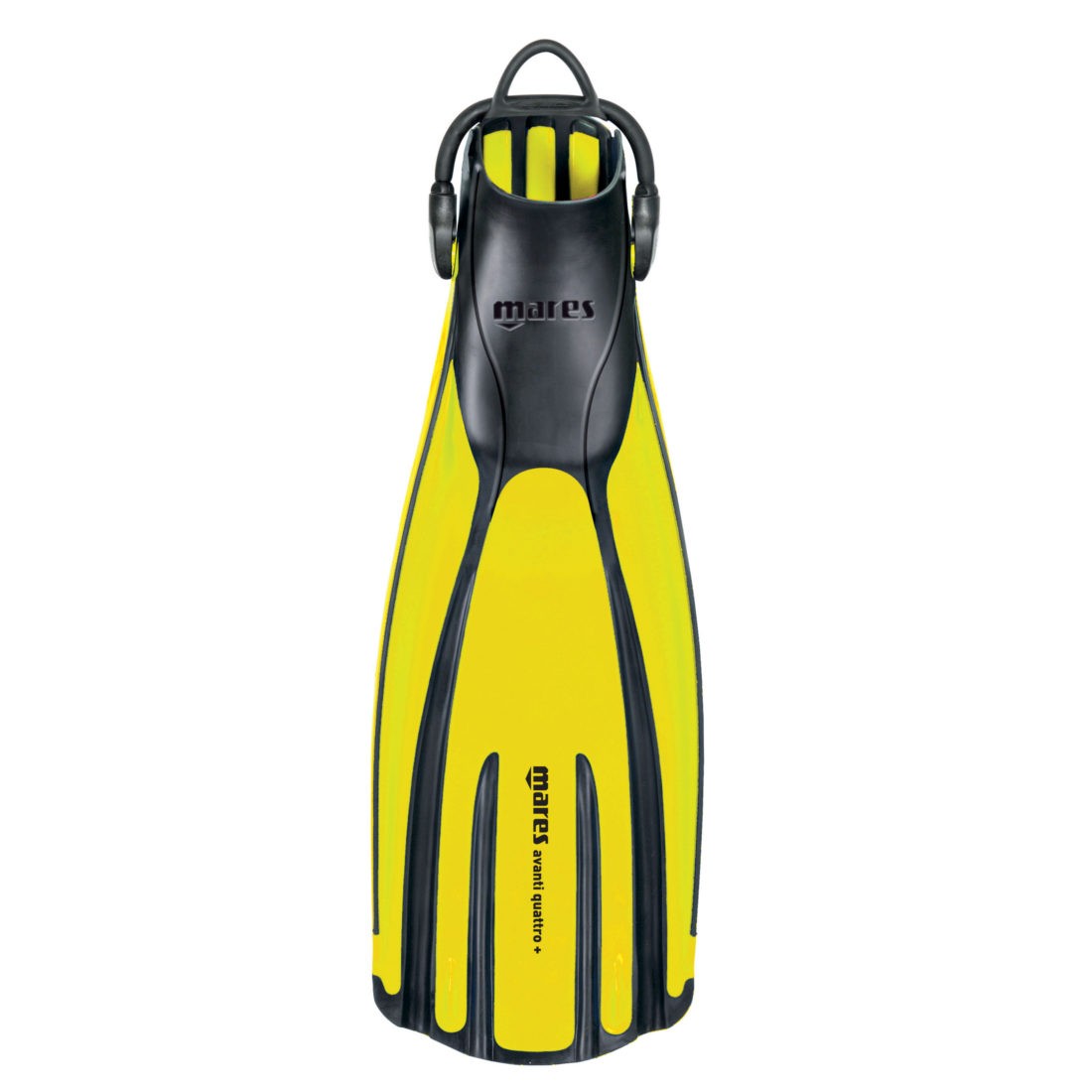
The Mares Avanti Quattro+ is an open-heel fin with a four-channel blade design. Mares uses channel-thrust concepts to shape the blade so it moves water during the kick cycle. The model is commonly considered by recreational divers looking for a traditional fin with a balance of propulsion and flexibility, but the feel depends on the diver’s leg strength, size, footwear, and kick technique.
Channel fins are shaped to flex and guide water along the blade. The marketing description does not mean that a channel fin is automatically more efficient than every paddle, split, or rubber fin. Flexibility and blade shape affect how the fin loads the legs and how it responds to different kick styles. If you mostly use a flutter kick, the fin may feel different than when you use a frog kick or short, controlled movements.
Fit and strap system
The Avanti Quattro+ is an open-heel design, so you wear it with suitable dive boots and use the heel strap to secure the foot. Choose the size while wearing the boots you will actually use. The foot pocket should hold the boot without pinching the toes or compressing the top of the foot. If the fin slips, do not assume a tighter strap will solve it; the pocket may be the wrong size or shape.
Check the heel strap and buckle for secure engagement and inspect them before each dive. If your model uses a spring or bungee strap, learn how to put it on and remove it without overstretching it. Keep replacement parts available if you dive frequently or travel to remote sites. A strap failure can leave you without a fin, so treat the strap as part of your pre-dive equipment check.
Who should consider it?
Consider the Avanti Quattro+ if you want an open-heel all-rounder with a channel-style blade and plan to do general recreational diving. It is not automatically the best choice for a diver who needs a very short, rigid fin for tight spaces or one who prefers the feel of a split fin. Try it against another blade style and compare how easily you can maintain a steady kick without calf or ankle discomfort.
Potential drawbacks
Its blade length and stiffness may feel less convenient for travel or confined spaces than a compact fin. Some divers prefer a stiffer blade for power, while others find it tiring over a long dive. The only reliable way to know is to try it with your usual boots and kick technique. Check the current Mares size chart and product details before ordering. Official range: Mares diving fins.
2. Apeks RK3: compact and rugged

Design details
Apeks describes the RK3 as a rugged thermoplastic-rubber fin with a short, wide blade, an oversized foot pocket, and spring straps. The company says the vented blade is designed to reduce resistance on the upstroke and generate thrust on the downstroke. The compact shape and robust material are part of its appeal for divers who value durability and control rather than a long blade.
A short blade can be easier to manage in tight spaces and when making small adjustments to position. It may also be convenient when walking to a shore entry or handling gear on a crowded boat. But compact dimensions do not automatically make a fin easy to use: blade stiffness and foot-pocket fit still matter, and some divers may prefer a longer fin for sustained swimming in open water.
Boot compatibility and sizing
Apeks uses size categories rather than relying solely on street-shoe size, noting that footwear and environment affect which RK3 size is appropriate. A thin wetsuit boot, a thick cold-water boot, and a rigid drysuit boot can occupy very different volumes even when the diver’s shoe size is the same. Follow the current size guide and try the fin with the actual boot. The foot pocket should not crush the boot or allow the heel to move excessively.
The spring strap is intended to make donning and doffing easier, including when wearing gloves. Inspect the springs and attachment points for corrosion, deformation, or damage. A spring strap should be secure without being so tight that it is difficult to put on. Check that the heel can be pulled into place without twisting the strap or trapping the boot material.
Best fit and limitations
The RK3 is worth considering for divers who want a compact, rugged fin and value maneuverability. It may be particularly relevant for drysuit divers and those who practise frog, back, or helicopter kicks, provided the blade stiffness suits their technique. The manufacturer describes it as suitable for demanding environments, but no fin makes an overhead or technical dive safe by itself; use the equipment configuration and training appropriate to the environment.
Some divers may find the RK3’s short, stiff blade less comfortable for their preferred flutter kick or long surface swims. Try it in a controlled setting before committing to a pair for frequent diving. Official details: Apeks RK3 dive fins.
3. Mares Excite Pro: firm channel-thrust blade
What Mares specifies
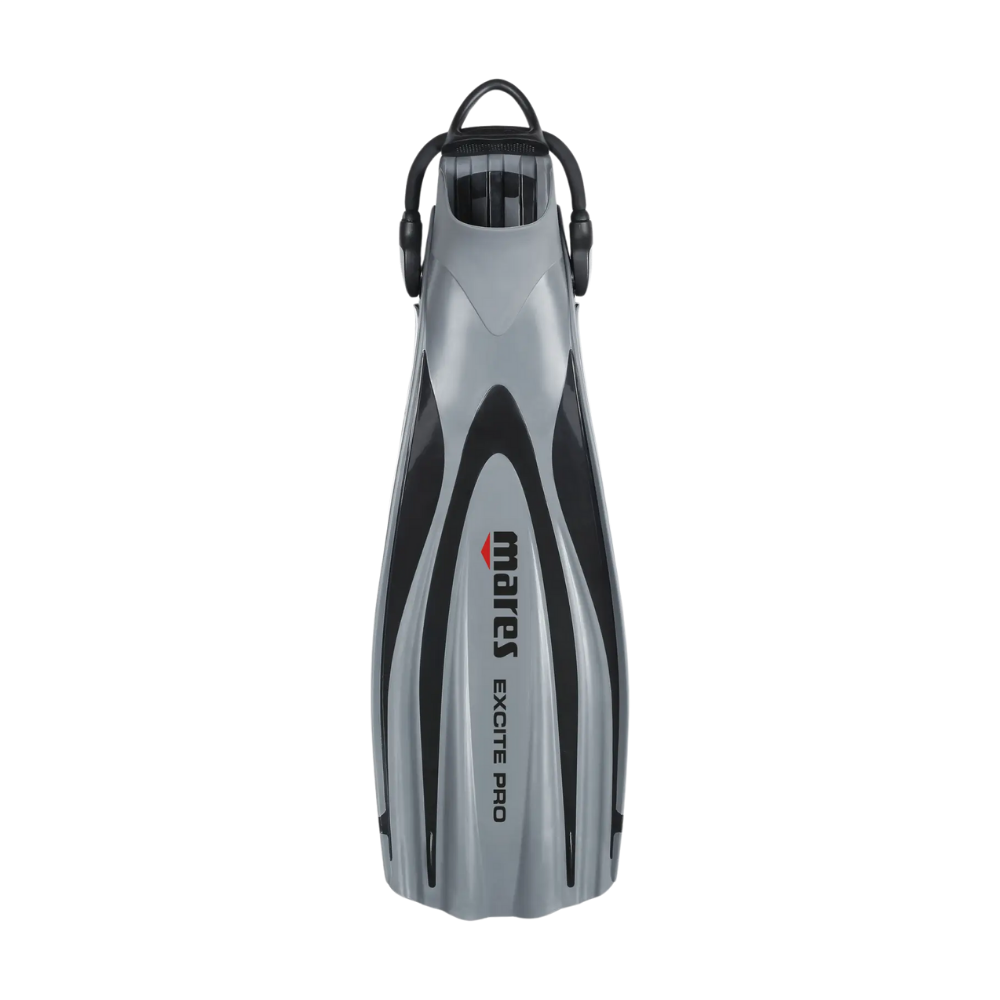
Mares describes the Excite Pro as an open-heel fin with a rigid blade, a bi-material construction, channel-thrust technology, and a bungee strap with an ergonomic heel pad. The brand positions the design around propulsion and power transfer. Because blade stiffness is a personal fit factor, do not assume a rigid blade is more efficient for every diver; it can feel powerful to some and tiring to others.
The open foot pocket means the fin is designed to be worn with boots. The bungee strap can simplify donning and doffing, especially on a boat, but you still need to check fit and strap tension. A fin that is too large can move on the heel and reduce control, while one that is too small can compress the boot and cause discomfort or cold feet.
Kick style and conditions
A rigid channel-style fin may suit divers who prefer a firmer response and want to move water with a decisive kick. The actual benefit depends on technique and leg strength. If you use small, controlled frog kicks, the fin’s length and stiffness may feel different from a diver who uses a broad flutter kick. If you are learning, ask an instructor to observe your kick and help you compare models in safe, shallow water.
Currents, exposure protection, and buoyancy also affect how much fin power you need. A stiffer fin is not a substitute for planning a dive within your ability, using appropriate entry and exit points, and following the guide or team’s instructions. Choose the fin that helps you maintain control without causing fatigue rather than buying the stiffest blade available.
Who should consider it?
Compare the Excite Pro if you want an open-heel fin with a rigid blade and a bungee strap. It may suit divers who prefer a firm kick response, but a softer or shorter fin could be more comfortable for others. Verify the exact size, colors, included strap, and availability for your region because product pages and assortments can change. Official details: Mares Excite Pro.
4. Atomic Aquatics BladeFin: traditional paddle-fin feel
Blade construction
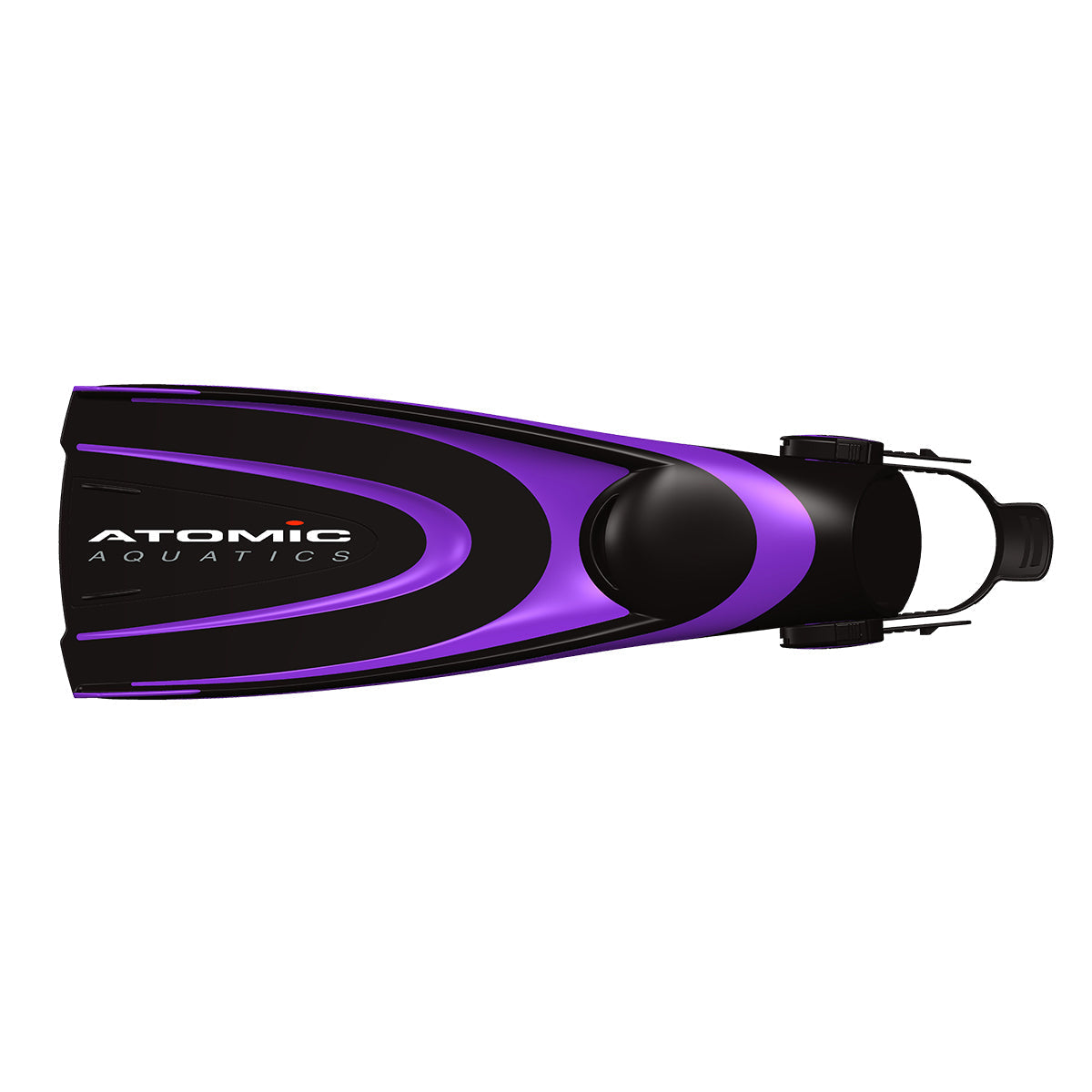
Atomic Aquatics describes the BladeFin as a paddle-style fin with a moderately firm blade, a structural frame, and vertical strakes intended to help it track straight. Its design emphasizes power transfer through the foot pocket and blade. Paddle fins are familiar to many scuba divers, but they vary widely in stiffness, blade length, and the way they flex. Do not assume that all paddle fins feel the same.
The BladeFin’s moderate stiffness is worth comparing if you want a firmer response without jumping straight to an especially stiff technical fin. How it feels depends on your leg strength and how you kick. A diver who has strong ankles and uses a steady flutter kick may appreciate a different stiffness from a diver who prefers a relaxed pace or uses alternate kicks frequently.
Straps and adjustment
Atomic Aquatics lists its EZ-LOK buckle system and offers spring-heel straps for its fins, with compatibility and included accessories depending on the model and package. The buckle system is designed to make attaching and removing the strap straightforward. Check the current product package and do not assume a spring strap is included unless the retailer lists it.
Try the BladeFin with your actual boots. The foot pocket should feel secure, and the fin should not rotate around the foot when you move your ankle. Make sure the strap does not press painfully against the heel and that you can release it with wet hands. If you use thick gloves, practise the adjustment before the dive rather than learning it on a moving boat.
Best for and limitations
Consider the BladeFin if you prefer a traditional paddle fin with a moderately firm blade and want a model designed around a structured frame and tracking rails. It may not be the most compact choice for travel, and a firmer fin may not suit every leg or kick style. Compare it with the shorter Atomic X1 if maneuverability and alternate kicks matter more to you. Official details: Atomic Aquatics BladeFin.
5. Atomic Aquatics X1 BladeFin: maneuverability and alternate kicks
Why its shape matters
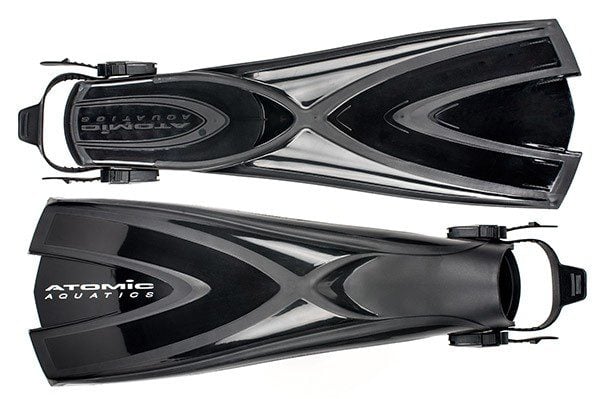
Atomic Aquatics describes the X1 BladeFin as having a shorter, firmer blade, lower-profile side rails, and a taller foot pocket. The company highlights maneuverability and control in tight spaces, including alternate kicking styles such as frog, scissor, backward, and helicopter kicks. Its design differs from the longer BladeFin and may be worth trying if you want to move with smaller, more controlled fin strokes.
Alternate kicks are not just about equipment; they require practice and appropriate instruction. A short fin can make it easier to avoid sweeping a long blade into a nearby surface, but the diver still needs to control buoyancy, trim, and distance from the environment. In caves, wrecks, or other overhead environments, use the techniques and equipment taught in the relevant training rather than treating a particular fin as a shortcut.
Foot pocket and boots
Atomic Aquatics says the X1 has a taller foot pocket intended to accommodate larger boots. This may be helpful for some cold-water or drysuit configurations, but do not choose by that statement alone. Try it with your boot, check heel security, and make sure the pocket does not pinch the toes or arch. The correct fit should transfer force without creating painful pressure points.
The EZ-LOK buckle system is designed for quick attachment and removal, and Atomic Aquatics lists spring-strap options for its fin range. Confirm the exact strap supplied and whether a replacement or retrofit option is available in your region. Inspect the buckle and strap before every dive, and rinse them after saltwater use.
Best for and limitations
The X1 is worth comparing if you value maneuverability, a shorter blade, and alternate kicking styles. It may not be the first choice for a diver who wants a long, flexible blade for relaxed open-water flutter kicking. Try it in a controlled setting and compare fatigue, control, and propulsion with your usual technique. Official details: Atomic Aquatics X1 BladeFin.
Open-heel vs full-foot fins
Open-heel fins have an open back and are normally worn with dive boots. A strap holds the heel in place, and the boot protects the foot when walking over rocks, coral rubble, or rough shore entries. Open-heel fins are versatile for boat and shore diving and can accommodate different boot thicknesses, but the fit depends on the foot pocket and strap. They can also be heavier and bulkier than many full-foot designs.
Full-foot fins have a closed foot pocket and are commonly worn barefoot or with thin socks, depending on the model. They are often chosen for warm-water diving, snorkeling, or travel because they can be lighter and simpler. Their fit needs to be precise: a pocket that is too tight can rub or cramp the foot, while one that is too loose can slip and waste effort. They are usually less convenient for rocky shore entries where boots are useful.
Neither design is automatically more efficient. Choose according to the water temperature, entry style, footwear, and fin availability. If you travel between warm and cold water, you may need different fins rather than one pair for every situation. Confirm the manufacturer’s intended use and size chart before buying.
Blade styles: paddle, channel, split, and compact
Paddle fins
Paddle fins use a continuous blade that flexes against the water. They come in many stiffnesses and shapes, from soft recreational blades to short, firm models. Their feel is familiar to many divers and can suit a variety of kick techniques, but the best stiffness is personal. A very stiff blade may require more leg strength, while a very flexible blade may feel less responsive to some divers.
Channel fins
Channel fins use shaped sections or rails intended to guide water along the blade during the kick. The Mares Avanti Quattro+ and Excite Pro are examples of models with channel-thrust designs. Such features can affect how the blade flexes and loads, but brand claims are not a guarantee of less effort for every diver. Fit, technique, and the pace of the dive still matter.
Split fins
Split fins have a slot that divides the blade into two sections. Some divers find them comfortable for a relaxed flutter kick, while others prefer a solid blade for control or alternate kicks. Split fins vary by model, and a design that feels efficient to one person may feel less suitable to another. If you are considering split fins, test them with the kick styles you actually use rather than relying on broad claims that they always reduce effort.
Short and compact fins
Short fins can be easier to handle in confined spaces, on boats, and while practising alternate kicks. They may be less suited to every long surface swim or current, depending on blade stiffness and the diver. Compactness is one factor, not a complete performance measure. Choose a blade that helps you move and maneuver comfortably in the conditions you expect.
How stiff should scuba fins be?
Blade stiffness determines how much the fin bends under load. A stiff fin may feel direct and powerful, but it can require more strength and may fatigue some divers. A softer fin may feel easier to move but can flex more than a diver prefers when kicking hard. Stiffness also interacts with blade length, material, foot pocket design, and kick technique, so it is not possible to choose a universal ideal from a product description alone.
If possible, try different fins in a pool or controlled open-water session with an instructor or dive center. Start at a comfortable pace and pay attention to ankle strain, calf fatigue, cramping, and how easily you can hold position. If a fin causes pain or requires you to change your kick in an uncomfortable way, it may not be the right fit. Do not force yourself to adapt to a fin that consistently causes discomfort.
Fit: boots, foot pockets, and straps
Fit is one of the most important fin-buying decisions. For open-heel fins, wear the same boots you plan to dive in. Check that the toes have enough room, the arch is supported without pressure, and the heel does not slide out. A pocket that is too tight can cause discomfort and reduce circulation; a pocket that is too loose can allow movement and make the fin harder to control.
For full-foot fins, try them with the socks or bare feet recommended by the manufacturer. The foot should sit securely without rubbing at the heel or compressing the toes. Remember that feet can change slightly in volume during the day and after activity. A quick try-on while standing still may not reveal rubbing, so ask the retailer about return and exchange terms and, where possible, try the fins in a supervised setting before a major trip.
Straps are important parts of the system. Inspect buckles, spring straps, bungee straps, attachment points, and adjustment hardware for wear. Learn how to release the strap without forcing it, and check that it cannot pop loose accidentally. Keep the manufacturer’s guidance for replacement parts and avoid improvising repairs that may fail underwater.
Finning technique and environmental control
The best fin cannot replace good technique. A broad, fast kick may stir up sediment or damage fragile surroundings, while controlled kicks and appropriate trim can help reduce disturbance. Learn the kick styles appropriate to your training and dive conditions. Flutter kicking, frog kicking, scissor kicks, and backward kicks each have different uses; none should be attempted in a challenging environment without appropriate practice.
In a current, do not rely on stronger fins as a substitute for dive planning. Consider the current, entry and exit points, gas management, group procedures, and your ability level. Follow your guide’s instructions and turn the dive when required. If you find yourself working excessively hard, communicate with your buddy and address the situation rather than simply kicking harder.
Near reefs, wrecks, and the bottom, keep your fins away from fragile life and sediment. Use buoyancy control and small movements where appropriate. Compact fins can help some divers maneuver in limited space, but they do not automatically prevent contact. Practice in an area where mistakes will not damage the environment and follow local rules about protected sites.
Travel, weight, and durability
If you fly frequently, consider the fin’s length, weight, and shape relative to your luggage. Compact fins can be easier to pack, but a smaller fin is not always the best fit for the dive. Check the airline’s baggage limits and protect the blades from bending or impact during transit. Avoid leaving fins under heavy luggage or in high heat if the manufacturer warns that the materials can deform.
Material affects weight, stiffness, and durability. Thermoplastic rubber fins such as the Apeks RK3 are marketed for rugged use, while other designs use composite or multi-material blades. No material is immune to damage. Inspect the blade for cracks, tears, separation, or deformation and check the foot pocket and strap attachments before each dive. Replace damaged equipment rather than assuming a small crack will remain harmless.
Rinse fins and straps with fresh water after saltwater use and let them dry out of direct sunlight. Store them flat or as directed by the manufacturer, without bending the blades unnaturally. Keep buckles and spring straps clean and inspect for corrosion or fatigue. If the fin has replaceable parts, confirm availability before relying on it for a remote trip.
Common fin-buying mistakes
Choosing by looks
Color and styling are personal, but they should come after fit, blade feel, and intended use. A striking fin that causes calf fatigue or slips on your boot is not a good purchase. Try models and compare their feel before deciding.
Assuming stiff means powerful for everyone
Stiffness is only useful if you can load the blade comfortably and maintain good technique. Too much resistance can tire the legs and lead to cramping. Match the fin to your strength and style rather than choosing the stiffest option.
Ignoring footwear
Open-heel fins need to fit with your actual dive boots. Street shoe size is not enough to select the right model, especially for drysuit boots. Use the manufacturer’s size guide and try the combination whenever possible.
Buying for a dive style you do not practise
A compact fin may appeal because technical divers use it, but the benefit depends on training and kick technique. Do not buy a specialized fin as a substitute for learning alternate kicks. Choose equipment for your current dives and skills, and seek training before entering more demanding environments.
Ignoring strap serviceability
Straps and buckles can wear or break. Check whether replacement parts are available and learn how to inspect them. A fin with a damaged strap should not be treated as ready for a dive simply because the blade is intact.
Frequently asked questions
What are the best scuba fins for beginners?
Beginners should prioritize fit, comfort, and a blade that feels manageable rather than choosing the stiffest or most expensive fin. An open-heel all-rounder can be versatile when paired with suitable boots, while full-foot fins may suit warm-water diving. Ask an instructor or dive retailer to help compare options.
Are split fins better than paddle fins?
Not universally. Some divers like the feel of split fins for a relaxed flutter kick, while others prefer paddle fins for control or alternate kicks. Designs differ widely, so compare specific models and use the kick technique you expect to use underwater.
Should I choose open-heel or full-foot fins?
Open-heel fins are worn with boots and are useful for many shore and cold-water dives. Full-foot fins can be lighter and convenient for warm-water diving, snorkeling, or travel. The best choice depends on footwear, water temperature, entry conditions, and fit.
Are short fins suitable for scuba diving?
They can be, especially when maneuverability and controlled movements matter. A short fin may not suit every long swim or current, and its stiffness affects performance. Try it with your preferred kick style before deciding.
How tight should scuba fins fit?
The foot pocket should feel secure without pinching, rubbing, or compressing the toes. Open-heel fins should be tried with the actual dive boots. The strap should hold the heel securely without causing discomfort or being difficult to release.
Can I use snorkeling fins for scuba?
Some fins are designed for multiple surface and underwater activities, but many snorkeling fins are not ideal for scuba boots or the conditions you plan to dive in. Check the manufacturer’s intended use, fit, and compatibility with your footwear. Consult your instructor or dive operator if you are unsure.
How long should scuba fins last?
There is no universal service life. Durability depends on materials, use, storage, sunlight, temperature, and maintenance. Inspect blades, pockets, straps, and attachment points regularly and replace damaged parts according to the manufacturer’s guidance.
Final verdict
Start with footwear and fit, then choose a blade that suits your kick and diving environment. The Mares Avanti Quattro+ is a versatile channel-style option to compare; the Apeks RK3 emphasizes a compact, rugged design; the Mares Excite Pro offers a rigid channel-thrust blade; Atomic Aquatics BladeFin provides a traditional paddle-fin feel; and the Atomic Aquatics X1 BladeFin is designed around a shorter blade and maneuverability.
Do not treat these recommendations as a universal ranking. Try fins with the boots you will use, pay attention to fatigue and control, and seek instruction for unfamiliar kick styles. Maintain straps and blades, plan dives within your training, and use good buoyancy and environmental awareness. The right fin should help you move comfortably and deliberately—not force you to fight your equipment.
Manufacturer sources
- Mares diving fins range
- Mares Excite Pro
- Apeks RK3
- Atomic Aquatics BladeFin
- Atomic Aquatics X1 BladeFin
How to choose scuba fins for your diving style
The right scuba fins should provide controlled propulsion without causing excessive leg fatigue. Blade length, stiffness, shape, foot-pocket design, and the type of kicking you use all influence performance. A fin that works well for a strong diver in current may feel tiring for a beginner or for someone who prefers relaxed reef diving.
Open-heel or full-foot fins?
Open-heel fins are commonly paired with dive boots and can be useful for shore entries, colder water, and rough surfaces. Full-foot fins may suit warm-water diving and travel where boots are not needed. Always try fins with the footwear you intend to use; a loose fit can cause rubbing, while an overly tight pocket can lead to discomfort or cramps.
Test comfort before choosing
Consider travel size, weight, durability, replacement straps, and the conditions where you dive most often. Ask a qualified dive professional to help match fin stiffness and style to your technique. Practise flutter and frog kicks without striking coral or the seabed. Comfortable, efficient control is more important than choosing the stiffest or most expensive pair.