
Choosing a scuba mask is personal: a model that seals beautifully on one diver may leak on another because faces differ in width, nose shape, cheekbones, and the way the skirt rests around the eyes. The most expensive mask is not automatically the best, and a panoramic lens cannot compensate for a poor seal. This buying guide compares five established masks and explains how to assess fit, lens design, comfort, maintenance, and value before buying.
Affiliate disclosure: As an Amazon Associate, we earn from qualifying purchases.
This is a specification-led buying guide based on manufacturer information, not a claim that Fit Diving has personally pool-tested every model. Product ranges and regional names can change, so confirm the exact model, lens options, availability, and warranty with the manufacturer or an authorized retailer. If possible, try the mask on your face before choosing it.
Best scuba masks: quick picks
- Best classic single-lens option to try: SCUBAPRO Frameless. A frameless design, soft silicone skirt, flexible buckle tabs, and broad single-lens view.
- Best premium dual-lens option to compare: Atomic Aquatics SubFrame ARC. An internal reinforcing frame and anti-reflective lens coating are its defining features.
- Best lightweight frameless design: TUSA Zensee M-1010F. A single-lens design with fabric strap, wide-view styling, and 3D SYNQ technology.
- Best dual-lens option to try: Cressi Ocean. Close-set lenses, adaptable silicone skirt, and adjustable buckles.
- Best specialist low-volume option: Cressi Atom. Primarily designed for freediving and spearfishing, so it is not the universal choice for scuba.
These are models worth comparing, not a claim that one mask fits every face. If a mask leaks during a proper fit check, choose a different shape regardless of its ranking or review score.
How we selected these masks
We prioritized identifiable manufacturer products and compared their intended use, lens layout, skirt and strap details, and practical limitations. We did not invent laboratory test results, leak rates, or personal comfort ratings. Mask fit is difficult to judge from photos: the skirt geometry and the shape of an individual face determine whether the seal works. Manufacturer feature claims can help build a shortlist, but a face-fit test should decide the purchase.
For a fair comparison, consider intended use. A recreational scuba mask should seal reliably, feel comfortable throughout a dive, allow access to the nose for equalization, and be straightforward to clear if water enters. Divers who wear corrective lenses may need compatible prescription options. Underwater photographers may prefer a black skirt to reduce side light and reflections, while some beginners prefer a clear skirt because it can feel more open. Neither color is universally better.
1. SCUBAPRO Frameless: a classic single-lens design
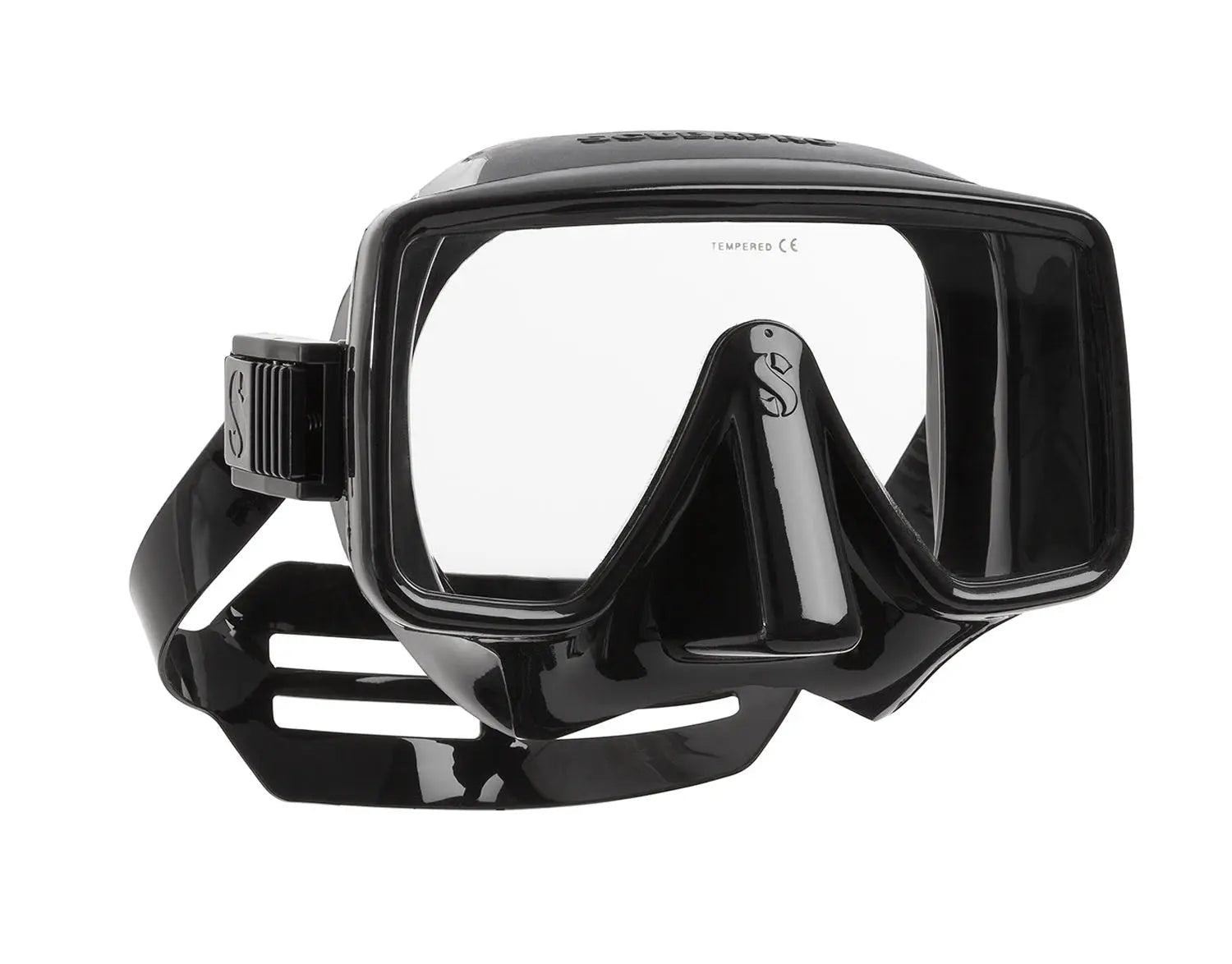
SCUBAPRO describes its Frameless mask as a single-lens design with a soft silicone skirt and double-edge seal. The manufacturer highlights a broad field of view, low internal volume, flexible buckle tabs, and a wide headband. Because the buckles attach to flexible tabs on the skirt, the mask can fold flatter for packing than many rigid-framed designs. Those details may appeal to divers who value a simple design and travel with their own equipment.
A single-lens mask gives the wearer an uninterrupted view across the center rather than a rigid bridge separating two lenses. That can feel open and natural for some people, but it does not guarantee the widest real-world view on every face. Lens position and skirt fit still matter. Try the mask while looking side to side and down, and check that the skirt does not press uncomfortably against the bridge of your nose.
SCUBAPRO lists the Frameless for average face size and describes its silicone as soft and flexible. Those are useful starting points, not a guarantee. The seal should rest evenly without being pinched or folded. A strap pulled too tightly can deform the skirt and create a leak, so do not fix a poor fit by cinching the strap hard against the back of your head.
Check the mask while wearing the hood or other gear you expect to use. Facial hair crossing the sealing surface can allow water to seep in; if you have a moustache, pay particular attention beneath the nose. A suitable mask-seal product may help some divers, but it cannot compensate for the wrong shape. Try the mask in a controlled shallow-water setting with a buddy or instructor if unsure.
Consider the Frameless if you like a single lens, traditional silicone skirt, and design that packs relatively flat. It may not suit people who prefer separate lenses, need a model with manufacturer-supported prescription options, or find the single-lens bridge area uncomfortable. SCUBAPRO’s listed version is not described as prescription compatible, so verify the exact product if corrective lenses matter. Official SCUBAPRO Frameless details.
2. Atomic Aquatics SubFrame ARC: reinforced construction and coated lenses
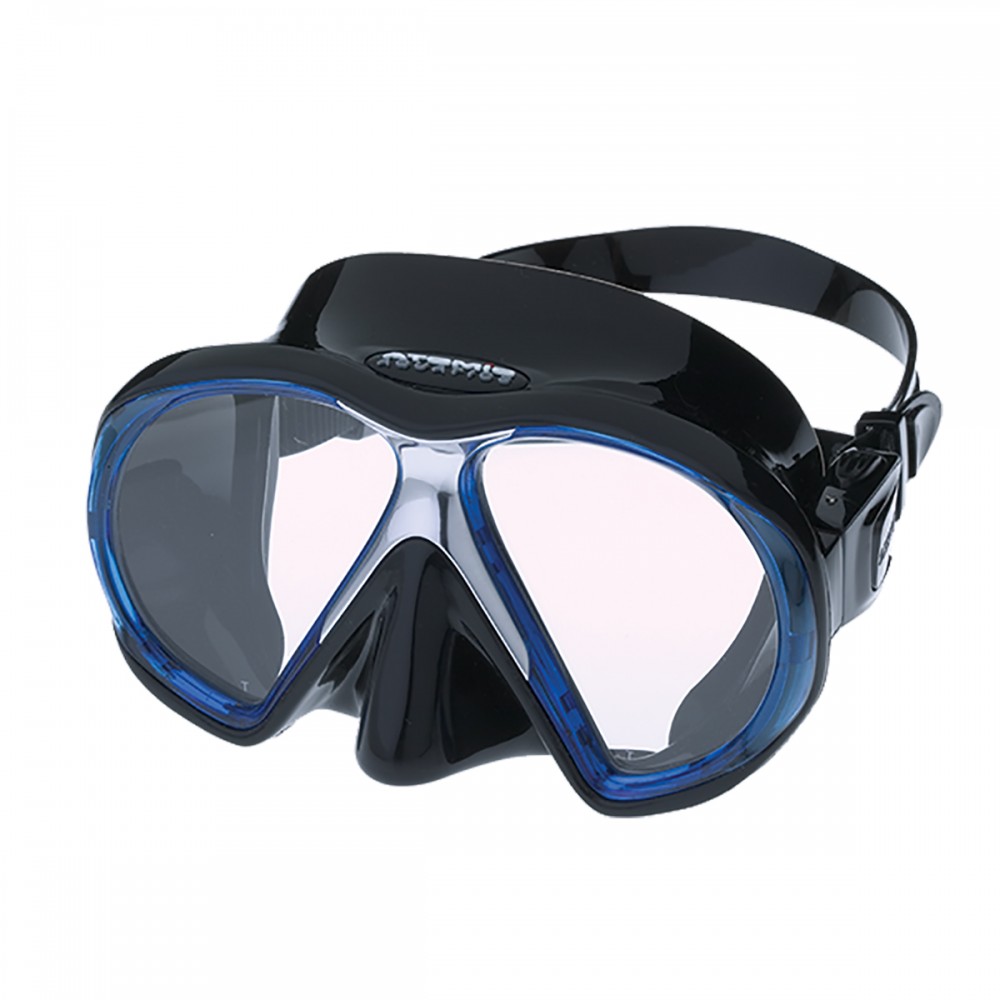
Atomic Aquatics describes the SubFrame ARC as a dual-lens mask with an internal frame molded beneath the silicone skirt. The company says this structure adds rigidity without a bulky external frame. The ARC version uses an anti-reflective coating on both sides of its UltraClear lenses. Atomic Aquatics claims the coating improves light transmission compared with standard glass; treat that as a manufacturer specification rather than an independent comparative test.
The dual-lens layout has two panes separated by a central nose bridge. This can make prescription-lens arrangements possible on compatible masks, but compatibility depends on the exact model and lens system. If you need correction, ask the manufacturer or retailer to confirm precise options and installation before buying. Do not assume every dual-lens mask accepts aftermarket lenses.
Glass can reflect some light at its surfaces. An anti-reflective coating is intended to reduce reflections and increase transmitted light. The benefit you notice depends on lighting, water conditions, lens care, and your vision. Coated lenses need proper handling: abrasive cloths, harsh cleaners, or unsuitable chemicals may damage the coating. Follow Atomic Aquatics’ care instructions rather than using household glass cleaners.
Atomic Aquatics advertises a limited lifetime warranty against frame breakage for the SubFrame, while other mask components have separate terms. Read the current warranty because coverage can depend on region, registration, proof of purchase, and the type of damage. Reinforcement does not make a mask indestructible; the skirt, strap, buckles, and lenses still need inspection.
The most important test is still the seal. Place the mask gently against your face without the strap and inhale lightly through your nose to see whether it stays in place. This preliminary check does not prove that the mask will remain dry during movement or with a regulator in your mouth. If the skirt pulls at your eyes, presses the nose, or leaves a gap at the cheeks, try another model. Official Atomic Aquatics SubFrame ARC details.
3. TUSA Zensee M-1010F: frameless design with fabric strap
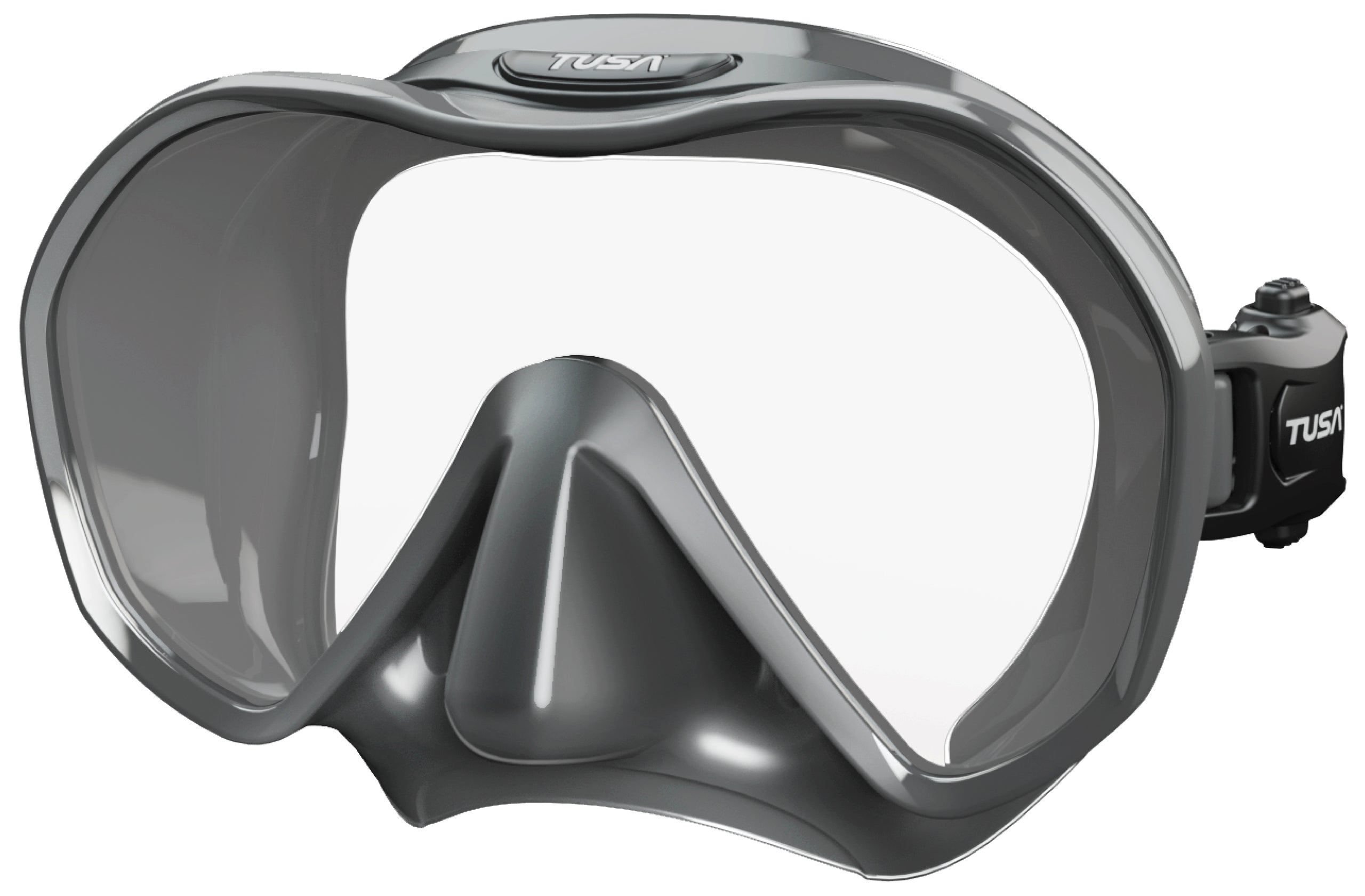
TUSA describes the Zensee M-1010F as its first frameless scuba mask, featuring wide-view styling and 3D SYNQ technology. This version comes with a fabric strap. TUSA says the strap is easy to adjust and designed to grip the back of the head, while the skirt uses varied silicone thickness and a low-friction surface. These features are worth considering, but individual comfort still depends on how the skirt meets your face.
A frameless mask integrates the lens structure and silicone skirt without a conventional separate outer frame. The design can reduce bulk and may pack conveniently, but frameless does not automatically mean lower volume, a wider view, or a better seal for every diver. Compare how close the lens sits to your eyes, how the nose pocket feels, and whether the skirt spreads pressure evenly.
A fabric strap feels different from a conventional silicone strap and may be easier for some divers to adjust over hair or a hood. Follow the product’s instructions for rinsing, drying, and inspection. Salt, grit, and repeated use can affect straps and hardware. Check that the strap stays secure and that adjustment is easy with wet hands.
TUSA lists the Zensee M-1010F as designed for smaller face shapes. This makes fit testing especially important for people with broader faces, but it is not a rigid sizing rule: only trying the mask can determine fit. TUSA lists internal volume as 13.1 cubic inches (215 cc), internal dimensions of approximately 91 by 166 mm, and weight of about 214 g. Dimensions help compare size but do not predict fit on their own.
Consider the Zensee if you prefer a frameless design and want to explore a fabric strap. Confirm whether its face shape and lens arrangement suit your needs, especially if you need prescription correction or have a specific preference for nose-pocket size. Inspect the skirt and lens assembly regularly, avoid crushing the mask in a gear bag, and keep it away from sharp objects. Official TUSA Zensee details.
4. Cressi Ocean: dual-lens mask with close-set lenses
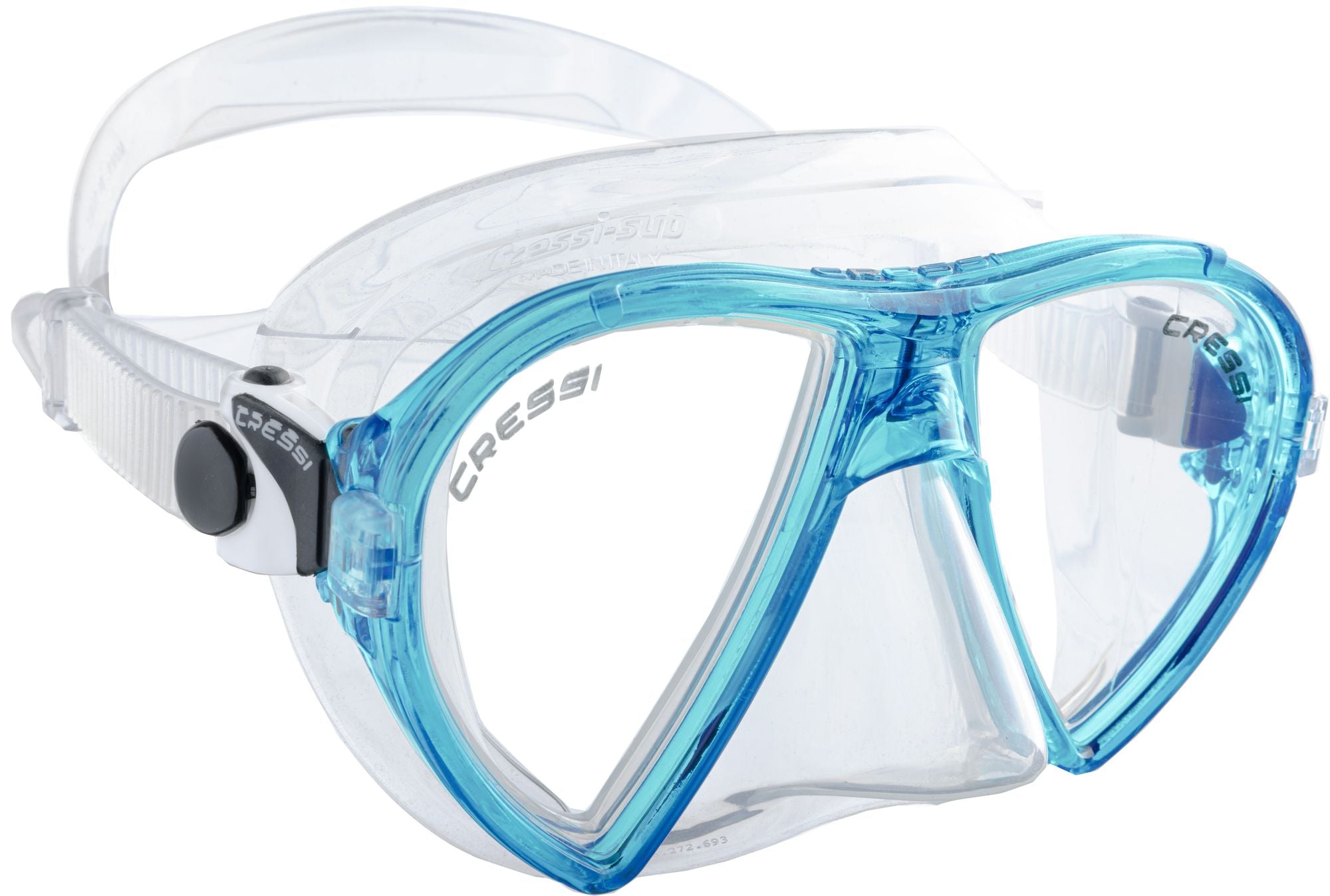
Cressi’s Ocean mask uses a dual-lens design and silicone skirt. Cressi describes an inverted-drop lens arrangement, with lenses positioned close to the eyes to help increase the field of view while keeping internal volume low. It has adjustable buckles integrated into the headband and a skirt designed to adapt to a range of faces. Those features make it worth comparing if you prefer two separate lenses instead of a single panoramic pane.
Low internal volume can make a mask easier to clear because there is less air space inside to displace, but technique and fit remain important. A low-volume mask is not automatically comfortable, and a large field of view does not mean a better fit for every face. Check the nose pocket carefully: you need to reach it comfortably to equalize without the mask pressing against the bridge of your nose.
Dual-lens masks are often easier to pair with model-specific corrective lenses than some single-lens designs, but confirm the Ocean’s exact prescription compatibility with Cressi or an authorized retailer. Do not assume a generic lens will fit. Ask whether lenses can be replaced safely, whether a dealer must install them, and whether the available correction matches your prescription.
Adjust the strap only enough to keep the mask stable. Too much tension can pull the skirt away from the face near the nose or corners, causing leaks and pressure marks. Try turning your head, looking down, and making the facial movements you commonly make while diving. The mask should remain comfortable without constant adjustment.
The Ocean is worth a fit test if you prefer a dual-lens mask with close-set lenses and straightforward strap adjustment. Cressi lists it for scuba diving, snorkeling, and other water activities, but use depends on your needs and fit. It is not possible to rank its seal above another mask without testing it on the diver. Official Cressi Ocean details.
5. Cressi Atom: very low-volume design for specialist use
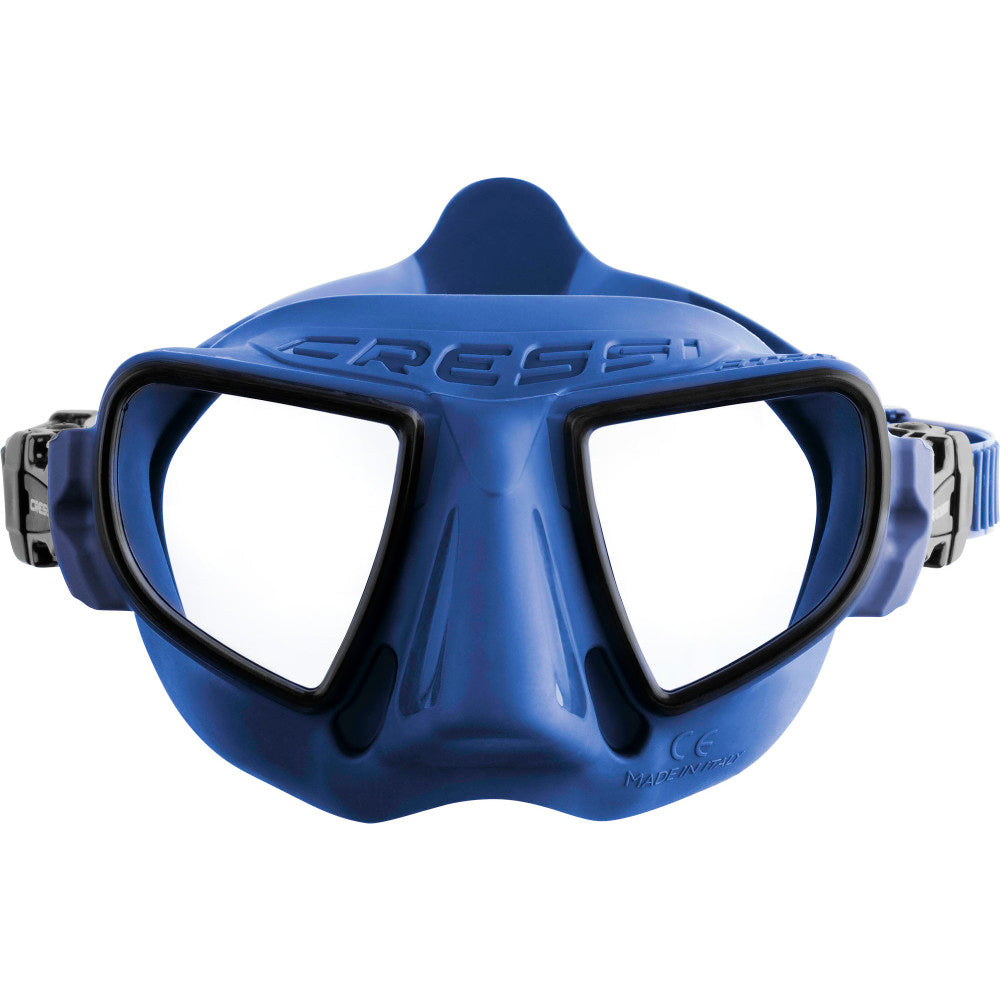
The Cressi Atom is a frameless, ultra-low-volume mask designed primarily for freediving and spearfishing. Cressi describes a semi-rigid core integrated with the silicone facial and lenses, a compact nose area designed to make equalization easier, and a very small internal space. These characteristics may interest experienced freedivers, but scuba buyers should think carefully before choosing it as an all-purpose mask.
Freediving and scuba place different demands on a mask. In freediving, low internal volume can reduce the amount of air needed to equalize the mask as depth increases. In scuba, the diver has a breathing gas supply and mask-clearing considerations, so a tiny mask is not automatically an advantage. It may also feel cramped on some faces, and its field of view differs from larger recreational models.
Try the Atom with the exact activity in mind. Check that the skirt seals without pressure, the nose pocket is easy to reach, and the mask does not obstruct your preferred view. If you mainly scuba dive, compare it directly with a recreational scuba mask rather than buying it solely because its low-volume specification sounds attractive. Follow the manufacturer’s lens and seal care guidance and do not assume it accepts prescription lenses.
For freediving or spearfishing, the Atom can be a specialist option to discuss with a knowledgeable retailer. It is not our universal best scuba mask because the manufacturer’s description emphasizes expert freedivers and spearfishers. Official Cressi Atom details.
How to choose a scuba mask that fits
Step 1: Check the seal without the strap
Place the mask gently against your face without putting the strap around your head. Keep your face relaxed and inhale lightly through your nose. A mask that stays in place briefly may be worth trying further, but this is not a guarantee that it will stay dry underwater. Do not press it hard into your face to force a seal. If it falls away immediately or the skirt visibly gaps, try another model.
Step 2: Inspect the skirt contact points
Look at the skirt around the bridge of the nose, under the nostrils, and along the cheeks. It should lie evenly without folding or pressing into the eyes. A mask can feel fine when standing still but leak when you smile, talk, move your jaw, or put a regulator in your mouth. If possible, test it with your normal mouthpiece and hood.
Step 3: Do not overtighten the strap
The strap stabilizes the mask; it does not create the seal by force. Pulling it too tight can distort the silicone skirt and create gaps. It can also leave marks and become uncomfortable during a long dive. Adjust it so the mask sits naturally and remains stable when you move your head. If you need extreme tension to keep it in place, choose a different shape.
Step 4: Test the nose pocket
You should be able to pinch your nose through the mask to equalize your ears. If the nose pocket is too small, stiff, or awkwardly placed, equalization may be difficult. If it presses against the bridge of your nose, the mask may become painful over time. Try the motion with your usual gloves if you dive in cold water, and ask a qualified instructor if you are unsure about equalization technique.
Step 5: Consider facial hair and hoods
Hair crossing the sealing surface can create a path for water to enter. A moustache can affect the seal under the nose, while a hood may interfere with strap or buckle position. Try the mask in the configuration you will use on dives. Do not assume a mask that seals on bare skin will perform identically with a hood or facial hair.
Single-lens vs dual-lens masks
A single-lens mask has one pane across the front. Some divers like the uninterrupted view and simpler appearance. A dual-lens mask has two panes divided by a central bridge. This layout can support model-specific prescription lenses and can allow lenses to sit closer to the eyes in some designs, reducing internal volume. Neither layout is universally better; face fit, lens position, nose-pocket shape, and preference determine which works best.
Side-window masks add panes at the sides to increase peripheral light and create a more open feeling for some wearers. Extra windows can add bulk and may not help every diver’s actual field of view. Panoramic claims are difficult to compare because manufacturers may describe view angles differently. If possible, look through the mask and check whether you can see down toward your instruments and to the sides without moving your head excessively.
Clear skirt vs black skirt
A clear silicone skirt can allow more ambient light into the mask and may feel open to divers who dislike an enclosed feeling. A black skirt blocks side light and reflections, which some underwater photographers and divers with light sensitivity prefer. A clear skirt can discolor with age or exposure to certain substances, while a black skirt can make the surrounding area feel darker. This is personal preference, not a performance ranking.
Choose the color that makes you comfortable and does not interfere with your vision. If you use a camera, consider whether reflections from the sides bother you. If you are new to diving and feel enclosed, try a clear skirt. If side light distracts you, compare a black skirt. The quality of the seal matters more than color.
Tempered glass, coatings, and prescription lenses
Most quality scuba masks use tempered glass rather than ordinary glass, but check the product specification. Tempered glass is designed for greater resistance to mechanical and thermal stress than ordinary glass, although it can still break if damaged or mishandled. Inspect the lens for chips, cracks, or loose parts before diving and remove a damaged mask from service.
Some masks use low-iron or anti-reflective glass to reduce green tint or surface reflections. Coatings can be useful but need careful cleaning. Avoid abrasive pads, paper towels, harsh solvents, or improvised scraping. Use products approved by the manufacturer. If you need prescription lenses, confirm compatibility for the exact mask and have lenses installed as directed. Do not modify a mask’s lens or frame yourself.
Fogging: prevention and care
Fogging occurs when moisture condenses on the inside surface of a lens. A new mask may have manufacturing residue that needs to be removed according to the manufacturer’s instructions. Some traditional glass masks require a first-use cleaning procedure, but coatings and materials vary, so do not automatically use abrasive toothpaste or a flame. Those methods can damage lenses, silicone, or coatings and may void a warranty.
Use a defog product suitable for diving masks and follow its directions. Rinse as instructed, avoid touching the inside lens after applying treatment, and do not overfill the mask with product. If fogging persists, check whether the lens was properly prepared, whether the mask is contaminated with sunscreen or oils, and whether the treatment is compatible. Avoid household detergents or cleaners unless the manufacturer explicitly approves them.
Straps, buckles, and travel
Try the strap adjustment system with wet hands. Some buckles swivel or have large tabs that are easier to manipulate, while others are compact to reduce bulk. A mask strap should stay adjusted during normal movement and be easy to loosen when removing the mask. Check whether replacement straps and buckles are available, particularly if you travel frequently or dive in remote areas.
Keep the mask in a protective case so the lens does not rub against metal clips, weights, or other hard equipment. Do not leave it in direct sunlight or a hot vehicle for long periods. Rinse it with fresh water after saltwater use and allow it to dry in a shaded, ventilated place. Store it away from oils, solvents, and sharp objects that can degrade or cut the silicone.
Common mask-buying mistakes
Buying by brand reputation alone
Reputable brands offer different shapes because divers’ faces vary. A premium mask that fits poorly is a worse choice for you than an affordable model that seals comfortably. Use reviews to build a shortlist, not to override your own fit test.
Choosing the widest advertised view
Field-of-view claims are not always measured consistently. A large lens may increase the view in one direction but sit too far from your eyes or interfere with your cheeks. Check the view through the mask and whether the skirt seals comfortably.
Using strap tension to fix leaks
Overtightening may distort the skirt. A properly fitting mask generally needs only enough tension to stay in place. If it leaks during a controlled fit check, try a different shape rather than pulling harder.
Ignoring prescription needs
If you need corrective lenses, plan for them before purchasing. Not every mask supports prescription lenses, and not all correction types are available for every model. Ask an authorized retailer to confirm the available solution.
Using aggressive cleaning methods
Do not assume every lens can be treated with toothpaste, a flame, or abrasive materials. Modern lenses and coatings vary. Follow the manufacturer’s first-use and cleaning instructions, and use a suitable defog treatment.
Frequently asked questions
What is the best scuba mask for beginners?
The best beginner mask fits comfortably, seals reliably, and lets you reach your nose to equalize. A simple single-lens or dual-lens model can work well. Try multiple shapes rather than buying only by price or online ratings.
Is a frameless mask better?
Not for everyone. Frameless designs can reduce bulk and pack conveniently, but some divers prefer the structure, fit, or lens options of a framed mask. Compare the seal and comfort on your own face.
Is a low-volume mask better for scuba diving?
Lower internal volume can make clearing easier, but it does not guarantee comfort or a better seal. Very low-volume designs are often favored by freedivers, whose mask equalization needs differ from scuba divers’. Choose according to your activity and fit.
Should I choose a clear or black skirt?
Clear skirts can feel brighter and more open, while black skirts reduce side light and reflections. Choose based on comfort and preference. Neither color makes up for a poor fit.
Can I use a snorkeling mask for scuba?
Use a mask designed and rated for diving, and confirm its lens and materials meet the manufacturer’s intended use. A mask that fits for surface snorkeling may not be the best option for scuba. Follow your instructor’s equipment advice.
How tight should a scuba mask be?
It should sit securely without being painfully tight. Excessive strap tension can distort the skirt and cause leaks. If it will not seal without strong tension, try another mask.
How often should I replace a mask?
There is no universal replacement interval. Inspect the skirt, strap, buckles, lens, and frame before use. Replace worn or damaged parts according to the manufacturer’s guidance, and stop using a mask with a cracked lens or unreliable seal.
Mask fit checklist before you commit
When comparing masks in a shop, take a few minutes with each candidate rather than judging from the mirror alone. Start with a clean face and position the skirt gently without the strap. Check that the top edge does not press into the brow and the lower edge does not sit on the lip. Breathe in lightly through the nose only as a preliminary seal check, then relax your face and remove the mask. A seal that appears to hold for a second is encouraging, but it is not a substitute for a supervised in-water test.
Next, check movement and access. Look left and right, tilt your head down as if reading a dive computer, and make sure the nose pocket allows you to pinch your nose. If you use a regulator, consider how the mouthpiece changes the shape of your upper lip and cheeks. A mask that seals while your mouth is relaxed may leak when you bite a regulator mouthpiece. Ask a qualified retailer or instructor to help if you are unsure, and never use a poor-fitting mask for a dive just because it is new or expensive.
Look at replacement-part support as well. Straps, buckles, and silicone skirts can wear over time, and the availability of model-specific parts can make maintenance easier. Check whether the maker sells replacement straps and whether the buckles can be replaced without special tools. If you travel frequently, a simple protective case and easy-to-find spare strap may be more useful than a feature you rarely notice underwater.
How to prepare a new mask safely
New masks can fog because manufacturing residue or oils remain on the inside of the lens. Preparation methods differ depending on the lens material and any coatings. Follow the exact manufacturer’s instructions first. Do not use a flame, abrasive toothpaste, scouring pad, or aggressive solvent unless the manufacturer explicitly approves that method for the exact model. These techniques can damage silicone, lens coatings, or the mask itself. If the manual recommends a specific first-use cleaner, use it as directed.
Before every dive, apply a suitable defog treatment according to its label and the mask maker’s instructions. Avoid touching the inner lens after applying defog, since skin oils can reduce its effect. If fogging persists, rinse and repeat the appropriate preparation steps rather than experimenting with household cleaners. After diving, rinse away salt and sand, allow the mask to dry out of direct sunlight, and store it in its case. Check the lens, skirt, strap, and buckles for damage before the next use.
Final verdict
Start with fit, then choose the lens layout and features you prefer. SCUBAPRO Frameless is a classic single-lens option; Atomic Aquatics SubFrame ARC adds an internal frame and anti-reflective lens coating; TUSA Zensee M-1010F offers a frameless design with fabric strap; and Cressi Ocean is a dual-lens option with close-set lenses. Cressi Atom is better treated as a specialist low-volume mask for freediving and spearfishing than as a universal scuba recommendation.
Try masks on your own face, avoid overtightening the strap, check prescription compatibility if needed, and follow the manufacturer’s instructions for first-use preparation, defogging, rinsing, and storage. A mask should support safe, comfortable diving—not distract you with leaks or pressure points.
Manufacturer sources
How to choose a scuba mask that fits
A good scuba mask should seal comfortably, provide a clear field of view, and remain stable when you move your head. Face shape varies, so a popular model may not fit everyone. Try several masks if possible, following a gentle fit check and avoiding excessive strap tension to force a seal. A comfortable mask is one of the most useful first purchases for a new diver.
Lens, skirt, and strap considerations
Single-lens and dual-lens designs can feel different in terms of field of view and prescription options. Silicone skirts are common, but shape and softness matter more than a marketing label. Check that the nose pocket is easy to reach for equalisation and that the strap and buckles can be adjusted while wearing gloves if needed.
Care and preparation
Follow the manufacturer’s initial cleaning instructions, use a compatible defog product, and store the mask in a protective case. Inspect the skirt, strap, and buckles before every dive. If the mask leaks or fogs repeatedly, review fit and cleaning rather than tightening it excessively. Practise clearing the mask during training so a small amount of water does not become a distraction.